Academic Dot Day activities for student creativity
Mark your calendars for September 15th – International Dot Day! This global celebration stems from Peter H. Reynolds’ beloved 2003 children’s book The Dot, which encourages creativity, confidence, and self-expression through the simple act of making a mark. Started by educator Terry Shay in 2009, Dot Day has become a worldwide movement that continues to inspire countless children to embrace their artistic abilities. This blog post explores engaging academic activities that teachers can use to celebrate Dot Day while fostering student creativity across various subjects.
What is Dot Day, and why is it important?
International Dot Day celebrates the transformative power of creativity in education. The holiday originated from Peter H. Reynolds’ book The Dot, which is a story of a caring teacher and student named Vashti, who doubts her artistic abilities until her teacher encourages her to “make a mark and see where it takes you.” Starting with a simple dot on a piece of paper, Vashti’s confidence grows as she discovers her unique voice, ultimately inspiring a peer to create his own squiggly mark.
In 2009, educator Terry Shay introduced this annual celebration to encourage learners worldwide to embrace their potential and leave their mark on the world. The movement demonstrates that everyone possesses creative abilities by being brave, and it builds student confidence while fostering artistic exploration. Just as Reynolds modeled the notions of originality and imagination in his book, Flocabulary similarly models innovation by using hip-hop lyrics and vibrant animations to make learning memorable and meaningful.
New to Flocabulary? Teachers can sign up for a trial to access our lesson videos and assessment activities. Administrators can get in touch with us to learn more about unlocking the full power of Flocabulary through Flocabulary Plus.
Academic Dot Day activities for student creativity
1. Encourage creative mindsets!
Student creativity can be actualized in many different ways and often depends on students’ preferred learning styles and strengths. Some students may have a keen ear or lean into more visual media, while others crave hands-on application. Encourage kids’ sense of curiosity and wonder by challenging them to imagine, “What if…?” as you expose them to a variety of content types. Tech-rich Dot Day activities can be a wonderful way to pull in media-rich experiences, while giving students access to content, resources, and talent from all across the globe.
- Students can bring their Dot Day illustrations to life through digital animation tools, or they can explore a bit of augmented reality by using the free Dot Day page from Quiver Vision.
Flocabulary leans into meaningful use of technology with its rich platform of more than 1,300 standards-aligned hip-hop videos and lesson activities. These animated videos put a spin on traditional vocabulary acquisition due to the rigor of how lessons are created. Each Flocab lesson is created with Flocabulary’s curriculum team and is steeped in research. The lyricists then work with the audio team to determine the music and performers, which optimizes the videos’ appeal at both an emotional and personal level; talk about creativity! Finally, the videos are created with a diverse team of illustrators, animators, video editors, and hosts to finalize the content’s style, accessibility, accuracy, and alignment to standards and learning objectives. Check out this Flocabulary lesson as an example of how to promote creative mindsets in your classroom:
- History of LEGO Bricks – Students in middle school can learn about the ingenuity of LEGOs, which have inspired the imaginations of generations of kids and have multiple STEM connections (pun intended!).

2. Use art to promote inclusivity
All educators aspire to build a classroom culture that is welcoming and inclusive of all individuals! The strength of classroom culture can greatly impact students’ academic progress, social and emotional learning, and overall confidence. When it comes to promoting creativity and imagination, students can feel averse to “putting themselves out there” and being vulnerable with their artistic expression and skill sets. An inclusive classroom culture can motivate students to be more vulnerable, empathetic, and motivated to take risks.
- One inclusive Dot Day activity is to give each student a circle to decorate. They can then cut the circle into quadrants and trade pieces to reassemble into a quilt-like, collaborative collage of circles! This collective project makes for a colorful and expressive display of community.
Flocabulary supports building a strong sense of classroom culture with its diverse learning opportunities and experiences. The media-rich lessons promote 21st-century skills like collaboration, critical thinking, communication, and creativity. These 4C’s are core to students embracing a growth mindset when it comes to their persona, academic, and – later – professional journeys.
- Joining In & Including Others – For grades K-3, students can build social skills around cooperative play and including others.
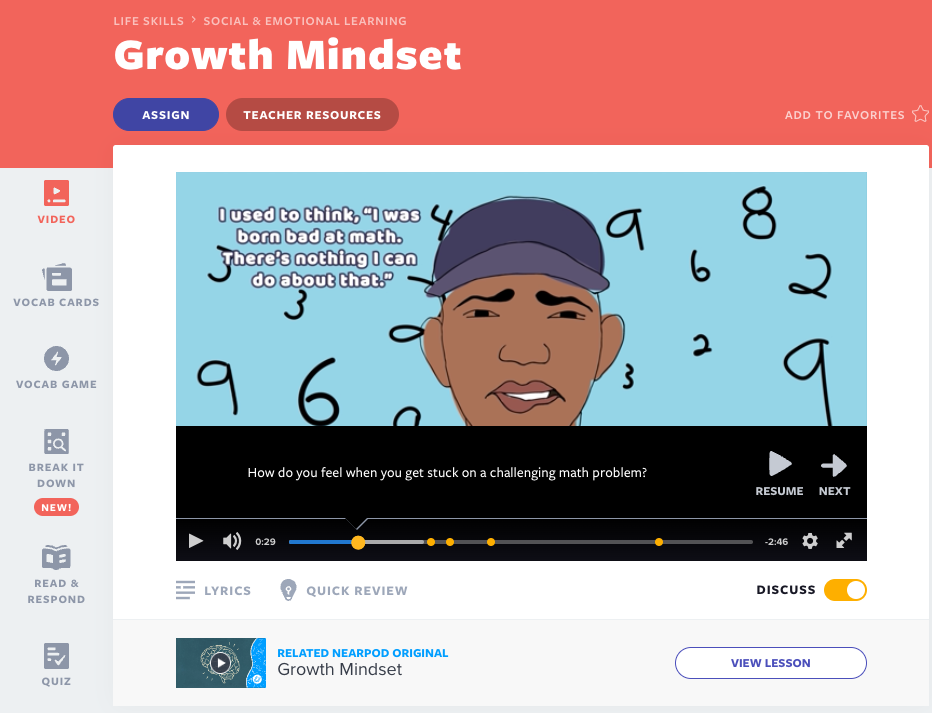
- Growth Mindset – This lesson for grades 4-12 emphasizes the value of adopting a mindset that embraces making mistakes, working hard, and believing that you can do anything!
- Goal Setting – This SEL lesson’s song for grades 6-12 reinforces the SMART acronym for setting personal goals.
3. Get crafty across the curriculum
You don’t have to be artistic to celebrate art in your classroom! There are ways to weave crafty and creative thematic activities throughout your school day and across core curricular areas. Give kids the opportunity to take an active learning approach to practice and apply new skills. As your students practice new skills, recognize how formative assessments and, even more so, authentic assessments can support students in showcasing their strengths in a variety of ways. From Dot Day math activities to Dot Day STEM activities, educators on Pinterest share many clever connections and creative approaches to check for understanding across the curriculum.
- Invite students to engineer structures of varying shapes and sizes out of simple toothpicks and DOTS candies to test stability. Additionally, they can use dot stickers to construct bridges made of tongue depressors, popsicle sticks, or plastic straws to test durability with the weight of round washers.


Flocabulary can take the creative connections one step further by highlighting real-world careers associated with such math and science concepts. Flocab can support students in Choosing a Career by encouraging them to think about how their personal and academic strengths can ladder up to career goals. The engaging videos use masterful storytelling to showcase real-life examples of notable figures making their mark:

- Architect: Alisa: This interview offers students in grades 9-12 career advice as Alisa explains how her STEM skills have supported her career goals of designing and building structures.
- Katherine Johnson & The Human Computers: Students in grades 5-12 can learn more about female African-American research mathematician Katherine Johnson, who made huge contributions at NASA during the Space Race.
4. Inspire with children’s picture books
In addition to Dot, Peter H. Reynolds has many other impactful picture books, such as Word Collector and Ish! His books spark the imagination and inspire the storyteller in kids of all ages. Dot Day is a great jumping-off point for student creative writing. There are many art projects – whether they be abstract scenes or fantastical creatures – that can serve as a catalyst for fictional tales. Begin with an art project and then challenge your students to write original stories by working through the writing process as a class.

- Give your students some cotton swabs, paint, and a piece of paper of a color of their choosing (black paper makes for a dramatic backdrop). Model how to use the cotton swab to make dots in pointillism fashion, where small dots make a larger image, especially from a distance. Then have them write a story tied to their masterpiece. This simple technique shows how paper becomes a breakthrough moment for artistic expression.
When it comes to all aspects of literacy – reading, writing, and speaking – Flocabulary uses immersive storytelling to underscore the power of vocabulary acquisition. By creating emotional connections with students, Flocab’s instructional approach makes learning memorable and meaningful through creative activities such as Vocab Game, where students reinforce new vocabulary by answering questions to unlock sounds and build an original beat. Plus, Flocabulary’s library is chock-full of topics tied to creative writing skills. Consider adding these resources to your lesson plans:

- The Writing Process – For students in grades 5-12, this hip-hop animated video uses the acronym POWER to help students recall the steps of the writing cycle.
- Descriptive Language – Students in grades learn how best to weave sensory details and imagery into their writing through descriptive language.
- Characters – Students in grades 3-8 can learn more about the world of crafting unique characters (human or otherwise!) in this inspiring lesson.
5. Promote self-expression
Art invites so many different means and modes for self-expression. The many Dot Day activities celebrate this notion of individuality and “leaving your mark” on the world (regardless of one’s age!). Encourage your students’ individuality by giving them opportunities to hone their voice through a myriad of channels or outlets. Dot Day activities for kids will provide all ages with a platform to express themselves creatively.
- Opinion Writing – Students in grades 3-5 can begin to express their individual voice through opinion writing.
- When I Grow Up – Students in elementary school are encouraged to reach far and dream big in this animated video (that also introduces academic vocabulary found on state tests!).
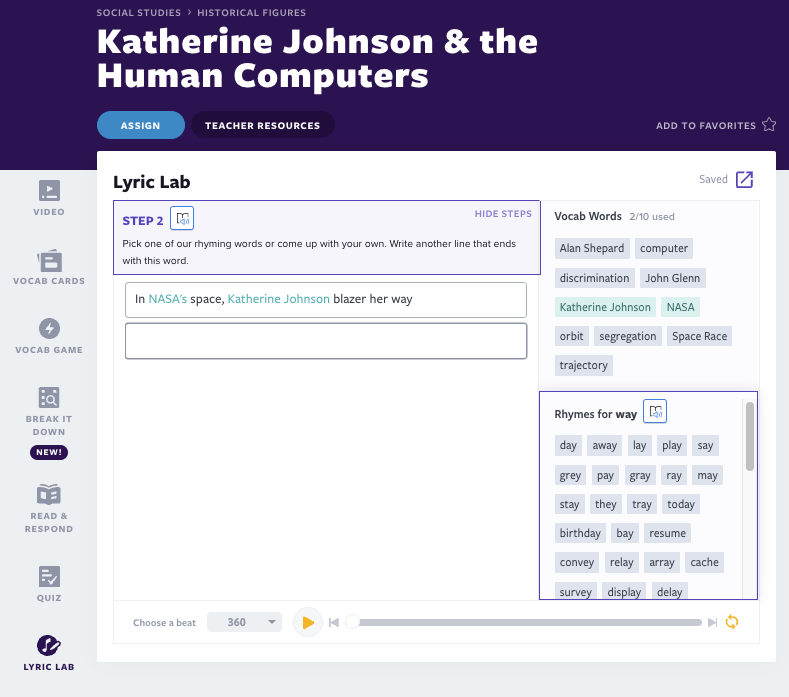
Flocabulary’s Lyric Lab promotes self-expression while exemplifying Bloom’s Taxonomy’s top higher-order thinking skill: creativity. Students can write poetry or raps, all while practicing their rhyming skills and strengthening their vocabulary skills. Lyric Lab increases student engagement while assessing their knowledge aligned to a wide variety of standards. Lyric Lab also supports student agency, yet in a culturally responsive environment. Give your students a channel for self-expression by inviting them to explore Lyric Lab individually or in small collaborative groups as part of your Dot Day celebration.
Start using Flocabulary today!
For years, teachers have celebrated their own creative mindsets by sharing many Dot Day ideas with each other year after year. This fun September holiday applauds the artistry found in teaching and learning at the beginning of each school year. These wonderful International Dot Day activities will set the tone for the upcoming months. Remember, creative and engaging activities can be part of your daily instruction. Join us at Flocabulary to spark kids’ imaginations and engage them in meaningful learning experiences.
New to Flocabulary? Teachers can sign up for a trial to access our lesson videos and assessment activities. Administrators can get in touch with us to learn more about unlocking the full power of Flocabulary through Flocabulary Plus.