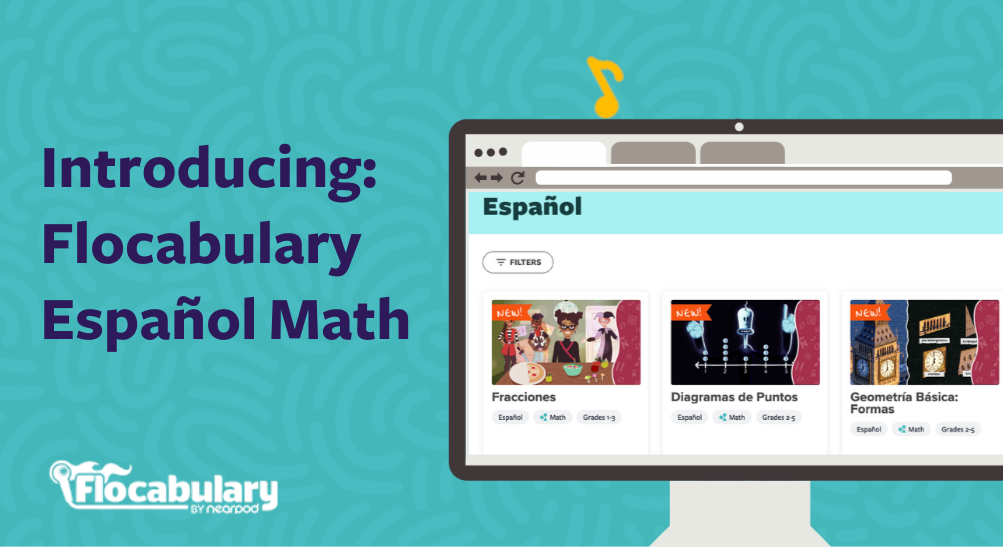

Introducing Flocabulary Español Math: Engaging Spanish-Language Math Lessons for K-8 Students
Last year, Renaissance Flocabulary launched Flocabulary Español, a set of videos and lesson activities in Spanish. We’ve now published over 50 Flocabulary Español language arts video lessons, with more on the way. But we aren’t stopping there! This month, we’re launching Flocabulary Español Math.
Flocabulary Español: The What and the Why
English learners, or emergent bilinguals, comprise a substantial—and growing—part of the K-12 population. In 2021, 10.6% of US public school students were emergent bilinguals, up from 9.4 percent in 2011. By far, the most common home language among these students is Spanish (about 75%).
In schools where English is the sole or primary language of instruction, limited English proficiency significantly interferes with learning. The flip side of this coin—and what the research shows— is that incorporating children’s primary language into instruction promotes learning. Of course, no one understands this better than educators, and indeed, Spanish-language Flocabulary content has been one of our most common user requests.
Flocabulary Español, an expanding set of videos and complementary activities in Spanish, addresses this need. Ranging from grades K-8, with a targeted focus on grades 3-5, each Spanish lesson serves as a counterpart to an existing English lesson. The two counterparts are designed to meet the same learning objectives and cover the same content. But they aren’t just rote translations of each other. Read on to learn more about our process.
Flocabulary Espanol and Transadaptation
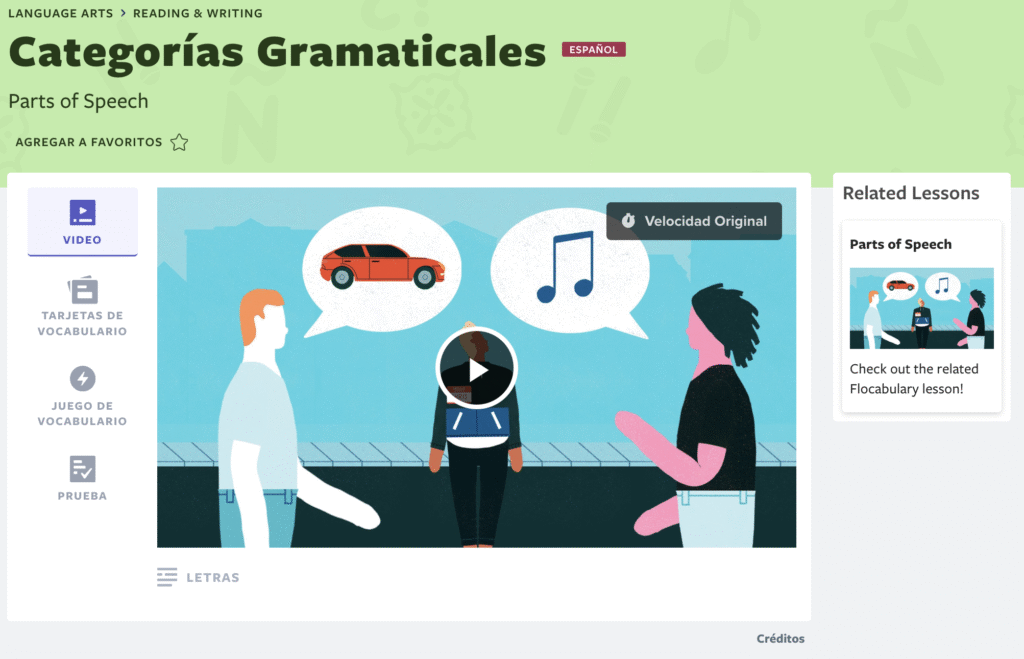
Flocabulary Español videos go well beyond simple translations of the English videos; rather, they’re transadapations. What’s the difference? While simple translation relies on word-for-word or sentence-for-sentence replacement of one language with another, transadaptation reimagines the content in the context of cultural and linguistic knowledge and sensitivity. For example, our (English) Author’s Purpose video lesson teaches the concept of authorial intent through the well-known acronym “PIE” (persuade, inform, entertain). In Spanish, however, the word “pie” is “tarta.” Clearly, transadapation was needed here. Take a look at Propósito del Autor to see the result.
To ensure that our Flocabulary Español transadaptations are both authentic and effective, we build them with a ground-up approach. The Flocabulary team works with Spanish-speaking lyricists, rappers, visual artists, and curriculum experts to break down each Flocabulary song into its important details. We then create a brand- new song in Spanish, often with new examples and references better suited for this new context. Each lesson maintains the engaging rhythm and academic rigor educators expect from Flocabulary, while being fully tailored to Spanish-speaking students.
New to Flocabulary? Teachers can sign up for a trial to access our lesson videos and assessment activities. Administrators can get in touch with us to learn more about unlocking the full power of Flocabulary through Flocabulary Plus.
Introducing: Flocabulary Español Math
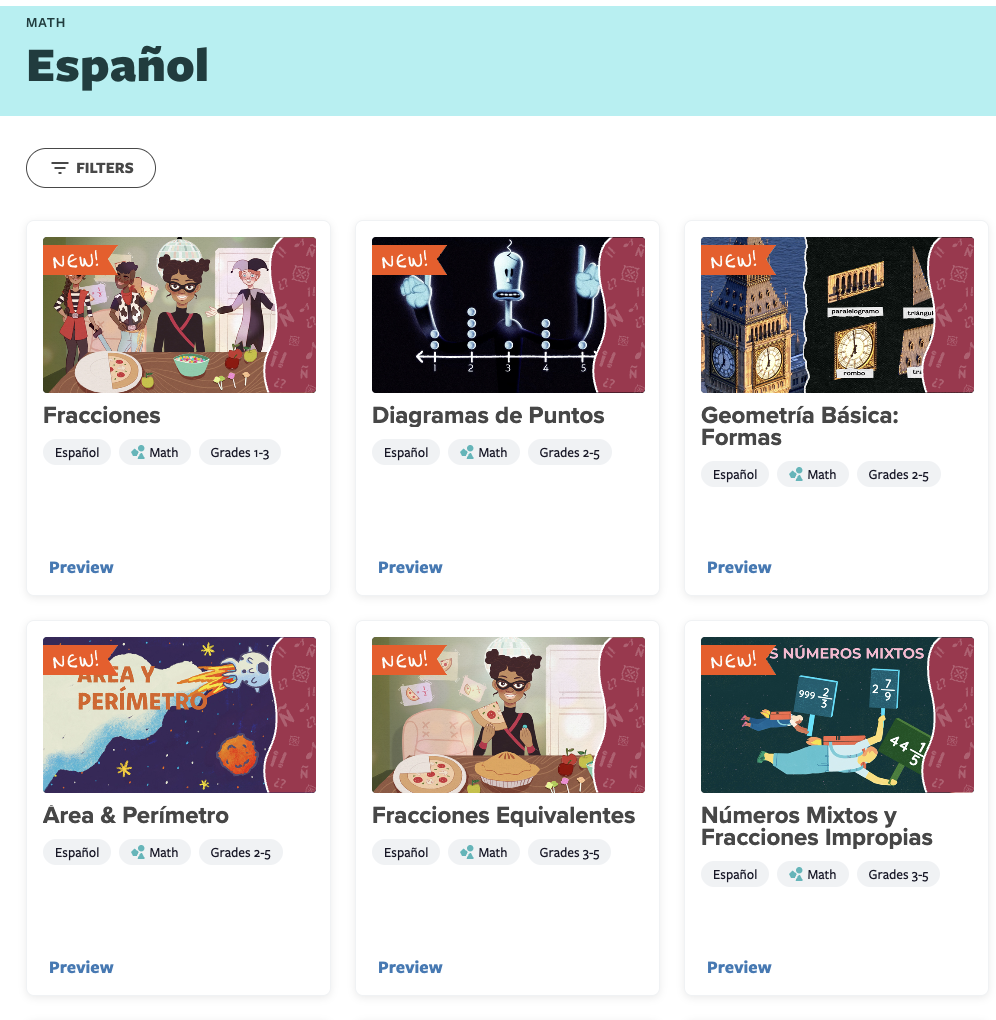
Like all Flocabulary videos, Flocabulary Español Math videos combine hip-hop music and rich visuals to keep students engaged while learning essential concepts and vocabulary. Flocabulary Español Math videos will be published on a rolling release, starting with 10 lessons this month and building up to 45 lessons by the end of the year. These lessons go beyond basic math facts and operations, instead focusing on content-heavy topics and foundational skills that students of all backgrounds often struggle with. They are designed to help students develop number sense and an understanding of key K-8 math concepts like proportional relationships (Tasas), geometry (Área & Perímetro, Tipos de Ángulos), and fractions (Fracciones, Fracciones Equivalentes). Like all Flocabulary lessons, each lesson is aligned to state and national standards.
All Flocabulary Español Math videos lessons also contain activities to extend and reinforce learning. On every Flocabulary Español Math lesson page, you will find a Video, Discussion Questions, Vocab Cards, a Vocab Game, and a Quiz. These lesson activities offer students additional practice opportunities and provide teachers with two auto-graded activities to check for student understanding (the Vocab Game and a Quiz). And for both teachers and students, each Quiz question has a readily available English translation.
Using Flocabulary Español Math in the Classroom
Whether you have a single Spanish-speaking student in your classroom or a class full of students learning in both English and Spanish, Flocabulary Español offers an authentic and engaging tool to supplement your daily instruction. Now that Flocabulary Español Math is here, let’s explore some of the ways educators can incorporate this new content into classrooms of any kind.
Substitute for English lessons: When math instruction and supplementary content is solely in English, students with limited English proficiency are likely to fall behind. For Spanish-speaking students with limited English, Flocabulary Español can be used as an alternative to traditional English lessons, allowing them to engage with Spanish content as they learn critical math skills. In classrooms that contain both English-speakers and Spanish-speakers, the English and Spanish video counterparts can be offered to each group accordingly.
A bridge to English: For Spanish-speaking students who are developing their English skills, Flocabulary Español serves as effective scaffolding toward English-language instruction. Students can watch a video in Spanish before and/or after viewing the English version not only to strengthen their understanding of the topic, but to strengthen their math vocabulary in English. Comparable Vocabulary and Quiz activities can also serve this purpose.
Bilingual Instruction: Engaging with both the English and the Spanish videos promotes bilingual instruction. Whether in a dual-language classroom or a classroom of English speakers learning Spanish, teachers can have students watch both the Spanish and English videos to help develop their language skills, while also strengthening and reinforcing their math skills. They can also have students complete some in English and some in Spanish.
Cultural and Linguistic Connections: Flocabulary Español videos and activities can be used with monolingual English students as an introduction to Spanish language and culture. Exploring this content together can promote understanding and inclusivity among students of different backgrounds, strengthening the classroom community.
Renaissance’s Commitment to Bilingual Students
Students who speak a language or languages other than English bring their own knowledge, culture, experiences, and skills to build on. Supporting them on their journey requires building on these assets and guiding them to success through the development of biliteracy. To this end, Flocabulary Español is just one piece of a larger puzzle at Renaissance. Renaissance designs assessment, practice, and instruction tools to support emergent bilingual students at each English Language Proficiency level—whether the instruction is English-only or dual language. We’re continually refining our products to better help teachers move from assessment to targeted instruction in ways that help all children learn best.
Start teaching with Flocabulary Español Math
Flocabulary Español Math launches this month with 10 lessons, expanding to 45 by year’s end. Whether you’re teaching in a dual-language classroom, supporting emergent bilinguals, or building cultural connections, these resources can help every student access rigorous math content.
Did you know Flocabulary Español is available to all account types? Teachers can sign up for a trial and begin exploring Flocabulary Español.