6 Tips for teaching creative writing to students
Why teach creative writing?
Teaching creative writing is a wonderful way to pull kids into many of the standards around reading, writing, speaking, listening, and language. Any English language arts (ELA) teacher understands the importance of mastering written communication skills, and none captures kids’ imaginations and hones their mechanical skills like creative writing! Creative writing piggybacks on the love of storytelling and encourages students to express themselves artistically. They can lean on the rules of the written language—grammar, structure, and clarity—while “breaking” the rules to play with voice, tone, and dialogue.
The Science of Reading (SOR) recognizes the interplay and reciprocity between reading and writing (some do speak to the merits more specifically as the Science of Writing). This research-based pedagogy emphasizes that you can’t learn one set of skills without the other. The holistic approach uses written responses to build vocabulary, phonics, and spelling, as well as comprehension. The physical act of writing also develops a deeper understanding of sentence structure and paragraph construction. The writing cycle guides students through an exploration of the cognitive processes associated with developing an idea, drafting, revising, and publishing. All of these skills make students better overall communicators.
Why is it difficult to teach creative writing?
Creative writing can be challenging to teach because it requires balancing structure with freedom. While students need to learn grammar, organization, and clarity, they also need space to explore ideas, take risks, and express themselves. Creative writing is a recipe that involves imagination, vulnerability, and clarity. Many educators may also feel unsure of their own creative writing abilities, which can make instruction more difficult. Whether you’re teaching a formal creative writing course or integrating creative elements into your regular curriculum, establishing clear structure while encouraging creativity is key.
Flocabulary supports creative writing instruction by offering engaging, standards-aligned resources that break down writing skills and processes. With animated hip-hop videos, rich vocabulary tools, and comprehension activities, Flocabulary makes it easier to teach both the mechanics and the creative elements of writing.
Here’s an example of the type of videos you can find on Flocabulary!
New to Flocabulary? Administrators can get in touch with us to learn more about unlocking the full power of Flocabulary through Flocabulary Plus. Teachers can sign up for a trial to access our lesson videos and assessment activities.
6 Tips for teaching creative writing to students
1. Begin with a poetry example
Find authors and bodies of work that you think are exemplars of good creative writing. Use these examples as a way to hook your students into wanting to learn more. Once their hearts and minds are captured, you can guide them to unpack the why. Did the author use figurative language well? Did they develop compelling characters? How did the story arc build? How did they take you on twists and turns with mere words?
Flocabulary has a whole section dedicated to poetry. Poetry is one way to showcase how wordplay, including rhythm and rhyme, can create compelling tales with lyrical language. You can begin by introducing the genre of poetry through the three-minute video, What is poetry? Then, continue by highlighting a simple poem like The Jellyfish by Marianne Moore to showcase how rhyme scheme paired with repetition can paint images in the mind’s eye. There is power in poetry when it comes to creative writing activities!

2. Focus on the importance of storytelling
To appreciate storytelling and emulate it, one needs to be able to understand the basic story elements, such as characters, setting, plot, conflict, and theme. Older students also often focus on point of view and tone. These elements are like building blocks. They work together to create structure and meaning, resulting in engaging narratives, plot lines that build to a compelling climax, and a satisfying resolution. In turn, these stories can inspire individuals’ own creative writing ideas. Orators of years past used to stand on street corners spinning their yarns. Nowadays, our students can use spoken and written language to tell their stories across a variety of modes and media. When students start writing, they can draw from these fundamental elements to craft their own compelling narratives.
Each Flocabulary video has a lesson sequence that targets different levels of Bloom’s taxonomy to guide students through higher-order thinking skills. The sequence includes Video, Vocab Cards, Vocab Game, Break It Down, Read & Respond, Quiz, and Lyric Lab. Comprehension is a key component of reading and writing that Flocabulary supports.
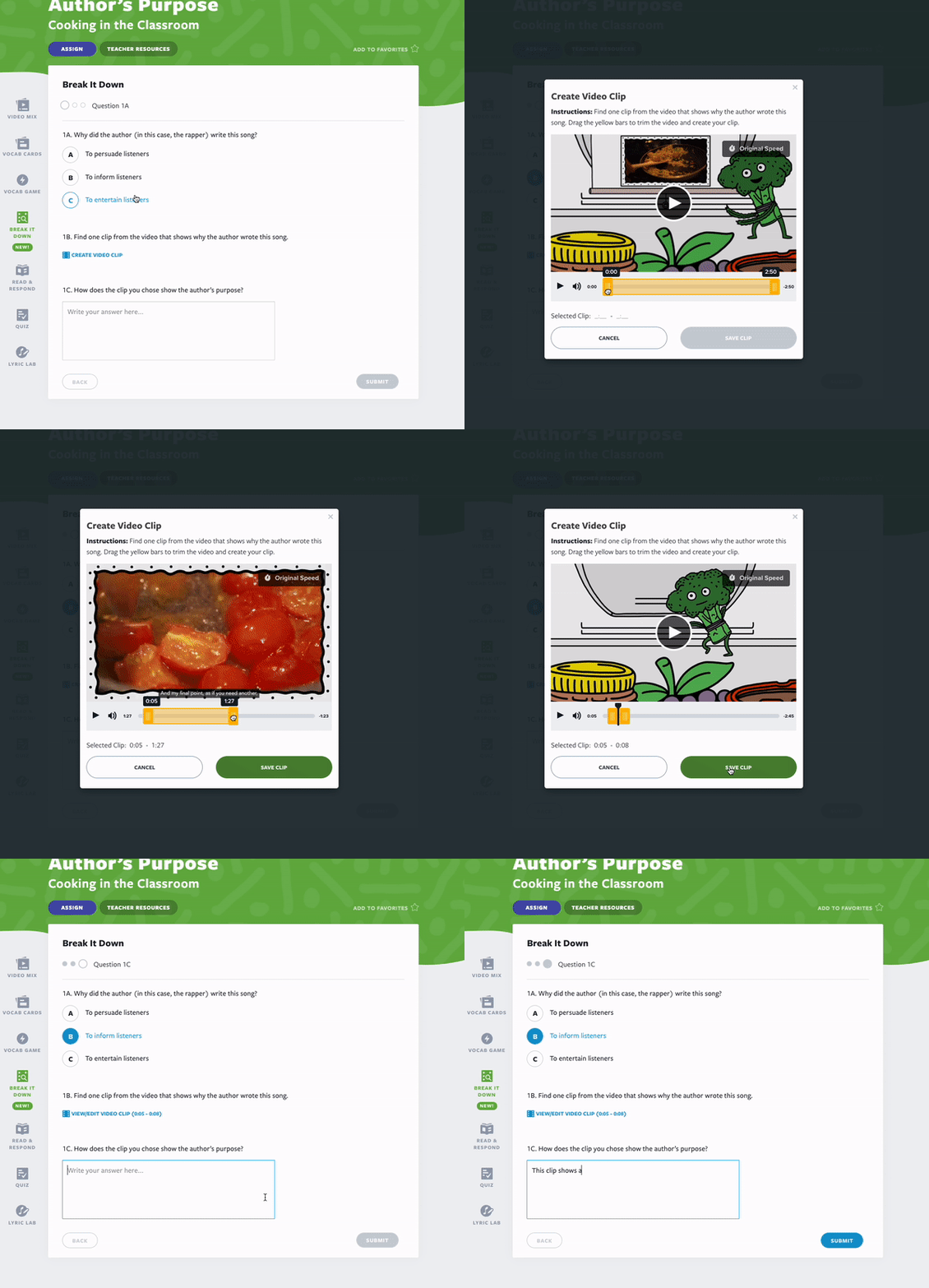
For example, you can use the Characters lesson for grades 3-8 and check for comprehension by using the lesson sequence. You can build out your creative writing lessons by including the Break It Down questions that ask for text-based evidence from the video. You may want to complement that activity with Read & Respond to extend learning to other standards-aligned passages. Plus, there’s always a 10-question, multiple-choice Quiz for formative assessment.
3. Encourage word play
The interplay of reading and writing is best highlighted through organic word play. English has one of the most complex sets of language rules, from grammar conventions to verb conjugations to pronunciation of our diverse vocabulary. So, as your students begin to learn the systems and structures through decoding skills and language comprehension, it is important to let them mold their own understanding through experimentation. Think back to your elementary years; there’s a reason that rhyme and rhythm were woven throughout much of your primary education. Creative writing prompts that encourage wordplay can help students experiment with language in fun and meaningful ways.
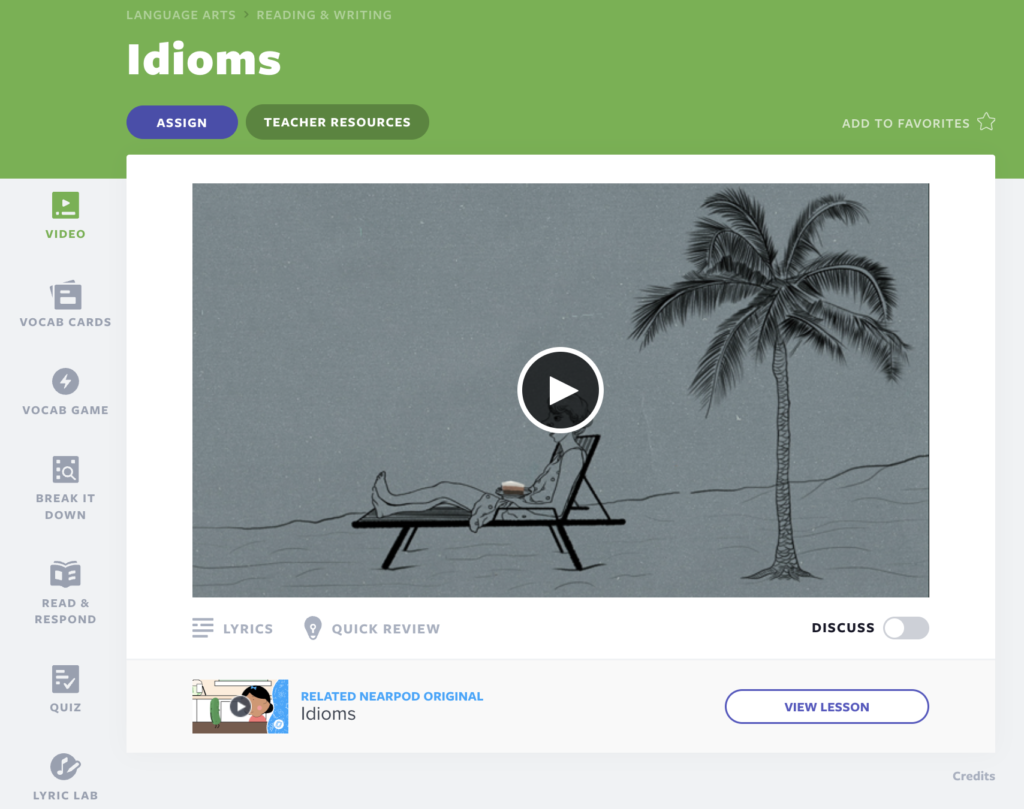
Flocabulary has tapped into how the rhythm in music is linked to language and literacy. As your students begin to learn how language is constructed, encourage them to play with words. They can learn more about Rhyme (grades K-2), Idioms (grades 3-12), and Using Descriptive Language (grades 3-12). Word play also will encourage budding authors to be quite selective with their Word Choice (grades 5-12). Selective word choice is a great bridge to vocabulary acquisition, a key indicator of school achievement.
4. Boost figurative language
When we think of teaching writing, we most often think of the mechanics: grammar, parts of speech, capitalization, and punctuation. While these foundational aspects are important for them to grasp, it is also valuable to give your students permission to then break those conventional rules. Figurative language (versus literal language) will give your students freedom of expression. Rhetorical devices like hyperboles, similes, metaphors, onomatopoeia, and personification (just to name a few!) evoke imagery in the spirit of “show, don’t tell.” As your students begin to develop their own voice and style in writing, encourage them to manipulate words and twist them into a meaning of their own. Story starters that incorporate figurative language can help students immediately engage with more sophisticated writing techniques.
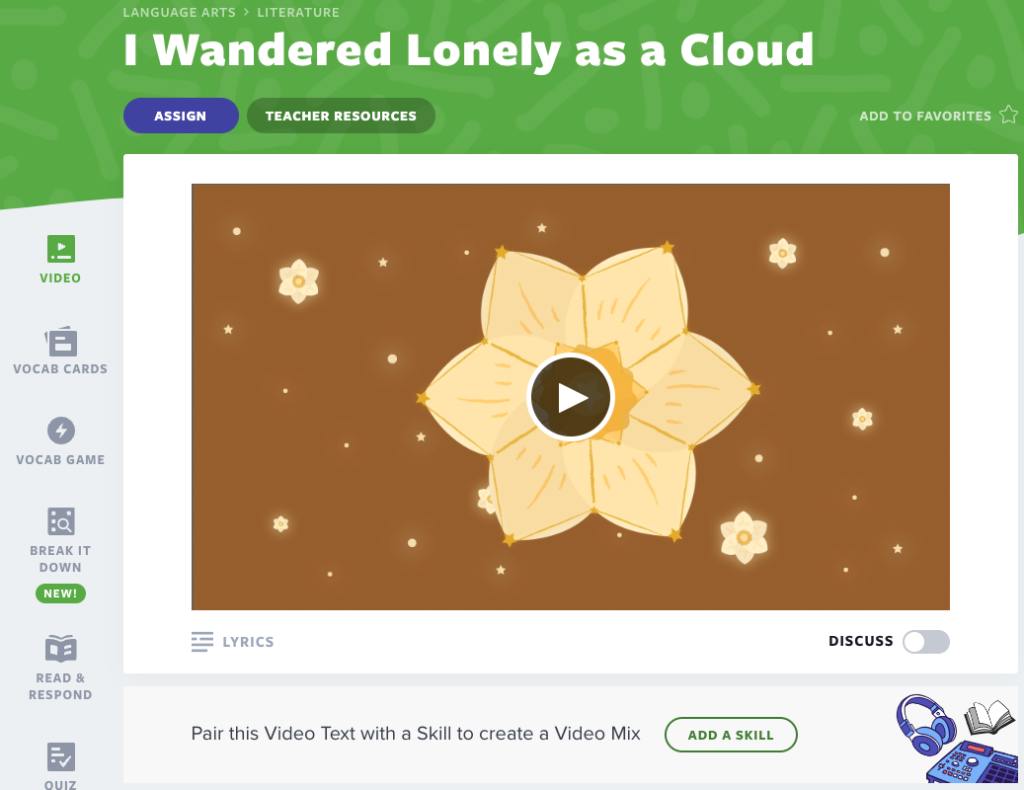
Flocabulary’s short-format videos help teach writing skills that students can then challenge as they build a personal toolbox of literary devices. Flocabulary Mix Lessons allow you to pair skill videos with video texts. For instance, you may want to compare and contrast Similes & Metaphors (grades 3-8) to help make their writing more vivid. By pairing these skills with a video text such as Dickinson’s “Hope” Is the Thing with Feathers or Wadsworth’s I Wandered Lonely as a Cloud, you will create a comprehensive lesson on these figures of speech. The ensuing Mix Lesson still includes all of the wraparound resources, including the Vocab Cards and Vocab Games, which are helpful since these abstract concepts are rich with academic vocabulary.
Add these lessons to your list of creative writing ideas for middle school and elementary! Consider writing prompts for kids that ask them to write about a time they encountered something magical, or have them write a story featuring a magical creature from outer space. These fantastical elements naturally lend themselves to figurative language practice.
5. Celebrate self-expression
At its core, creative writing requires self-expression. Regardless of genre, creative writers lean on their own emotions and experiences to bring their artistic expression to life. Creative writing has many benefits, including emotional regulation, problem-solving, and resilience. Creative writing encourages critical thinking as well as good communication. There are several mental health benefits as well, such as expressing emotions, reducing stress, and building self-esteem and confidence. Prompts for middle schoolers might include having them write a letter to their future selves or write about their favorite sport and what it means to them.
Flocabulary’s Playlists are AI-powered to find the content that best aligns with your curricular goals. Simply type in a prompt and press “GENERATE PLAYLIST” to see an initial list generated within seconds. You can then save and edit the list to continue refining the results to best meet your needs. These Playlist videos will help round out your teaching plans while inspiring story ideas for students of all ages.
6. Don’t forget the writing cycle
One of the best ways to empower young creative writers is to introduce them to the writing cycle, which visualizes the work that goes into story writing. The cyclical image, also known as the writing process, emphasizes that good stories take time, revision, and support. Many strong writers say that the hardest part of creative writing is knowing when to stop writing. The Writing Process (grades 5-12) shows that the endeavor is dynamic and multifaceted. Whether students are crafting a short story or a longer piece, give your students this From Start to Finish handout as a refresher for some tips. Students might even draw inspiration from video games when developing their narratives, creating interactive storylines, or character development arcs.
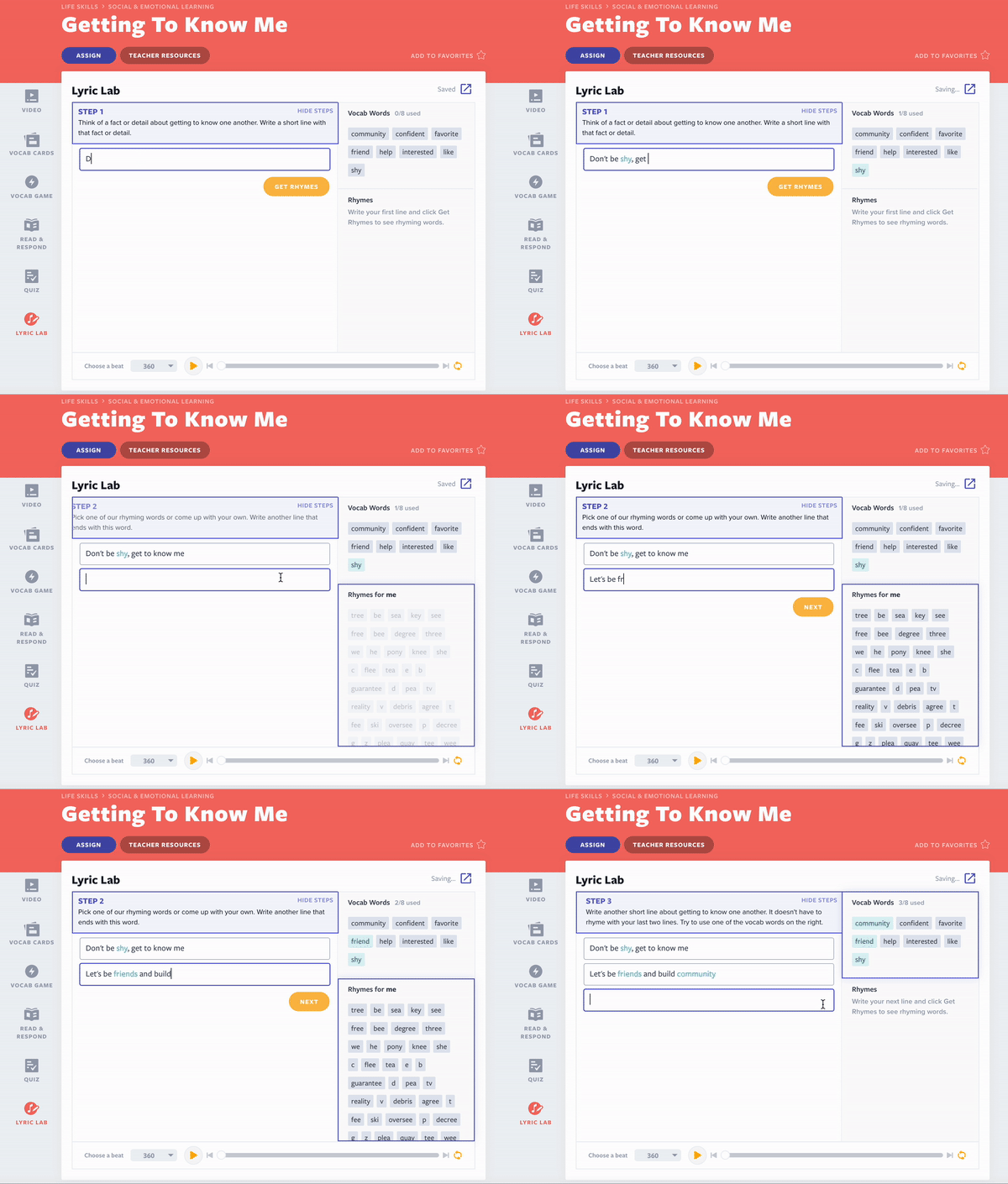
One way to bring your students through the complete writing process is to have them work individually or in small groups with Flocabulary’s Lyric Lab. Here, students can experiment with the interchange of seed ideas, word choice, rhyme and rhythm, storytelling, AND publishing, all within a tech-rich experience. Flocabulary’s intuitive platform promotes culturally responsive teaching by giving students a channel for powerful self-expression and storytelling.
Start planning your creative writing lesson plan today
Remind yourself that regardless of your own creative writing chops, you can and should teach creative writing to your students. Creative writing is a cornerstone of strong literacy skills. Plus, it is an empowering skill set to develop, and one that will last a lifetime. Flocabulary not only models the appeal of creative writing, it will also help encourage students to take agency in developing their own reading and writing prowess. Join your students in embracing storytelling and story writing this school year.
New to Flocabulary? Administrators can get in touch with us to learn more about unlocking the full power of Flocabulary through Flocabulary Plus. Teachers can sign up for a trial to access our lesson videos and assessment activities.