


Flocabulary Recap: An Overview on Our Newest Features & Content
This new addition to Flocabulary’s instructional sequence empowers students to develop close reading and content area literacy skills and is available on select Flocabulary units. We continue to add the feature to more and more units (for a full list, check out this blog post).[/vc_column_text][/vc_tta_section][vc_tta_section i_icon_fontawesome=”fa fa-comments” title=”Pause & Play” tab_id=”1472489950379-0672736d-aff0″ add_icon=”true”][vc_column_text]With Pause & Play, prompts and questions appear at specific points during a Flocabulary video to facilitate further discussion and exploration of the content. You can turn it on and off as you wish.
Challenge your students to dive deeper and think critically with this new feature! Pause & Play is available on many – but not all – Flocabulary units, though we continue to add it to more all the time.
Find a complete list of units with the feature in this blog post.[/vc_column_text][/vc_tta_section][/vc_tta_accordion][/vc_column][/vc_row][vc_row][vc_column][vc_cta h2=”Try Flocabulary’s New Features” txt_align=”center” add_button=”right” btn_title=”Start My Trial” btn_style=”flat” btn_color=”primary” btn_size=”lg” btn_align=”center” btn_i_type=”typicons” btn_i_icon_typicons=”typcn typcn-arrow-forward” css_animation=”left-to-right” btn_link=”url:https%3A%2F%2Fwww.flocabulary.com%2Ftrial%2Fschool%2F||target:%20_blank|” btn_add_icon=”true” btn_button_block=”true” btn_custom_onclick=”true”]Use Lyric Lab, Read & Respond, Pause & Play and more in your classroom for 30 days. Free.[/vc_cta][/vc_column][/vc_row][vc_row][vc_column][vc_text_separator title=”New Content” title_align=”separator_align_left” color=”custom” border_width=”6″ accent_color=”#f65412″][vcex_spacing][vc_column_text]Since May, we’ve rolled out or updated nearly 30 Flocabulary units. Though our unit topics ranged from Internet Safety to The French Revolution, many of our new releases were focused on building our ELA and STEM resources across grade levels. Here are some of our faves from the summer (click a blue square to browse):[/vc_column_text][vcex_spacing][vc_tta_pageable no_fill_content_area=”1″ active_section=”1″ pagination_style=”flat-rounded” pagination_color=”blue”][vc_tta_section title=”Contractions (Grades K-3)” tab_id=”1472490330940-c531c99b-3139″][vc_text_separator title=”Contractions (Grades K-3)” border_width=”3″ el_width=”80″][vcex_spacing size=”20px”][vc_column_text] In this video featuring a funny magician and an emcee who’s a grammar whiz, students learn to identify and form common contractions. The video explains how to form contractions with “not,” “will,” “am,” “are,” “is,” “have,” “has,” “had” and “would” by replacing letters with an apostrophe. Watch it now.[/vc_column_text][/vc_tta_section][vc_tta_section title=”Scientific Inquiry (Grades 3 – 8)” tab_id=”1472490331026-77084aba-6c7e”][vc_text_separator title=”Scientific Inquiry (Grades 3 – 8)” border_width=”3″ el_width=”80″][vcex_spacing size=”20px”][vc_column_text]
 How do scientists study the natural world? In this unit, students will learn the characteristics of science, the difference between science and pseudoscience and examples of scientific laws, theories and models. They’ll learn how scientific knowledge develops through a rigorous and iterative process and how that knowledge is modified as new evidence is uncovered. Watch it now.[/vc_column_text][/vc_tta_section][vc_tta_section title=”Personification (Grades 4 – 8)” tab_id=”1472490529406-909208ad-4c6f”][vc_text_separator title=”Personification (Grades 4 – 8)” border_width=”3″ el_width=”80″][vcex_spacing size=”20px”][vc_column_text]
 Personification is a powerful literary device. It can create a mood, reveal a theme and make imagery more vivid and memorable. In this video, you’ll learn what personification is and how to use it in your own writing, too. Watch it now.[/vc_column_text][/vc_tta_section][vc_tta_section title=”Percents (Grades 6 – 8)” tab_id=”1472490840223-cacceffe-0782″][vc_text_separator title=”Percents (Grades 6 – 8)” border_width=”3″ el_width=”80″][vcex_spacing size=”20px”][vc_column_text]This video introduces the concept of percents as a way
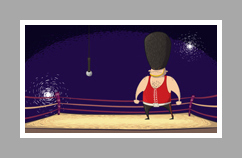 of expressing a part out of 100. It demonstrates how to express the same quantity as a percent, fraction and decimal and how to convert a percent to a fraction and to a decimal. The video then models word problems that involve finding the percent, given the part and the whole, and finding the whole, given the part and the percent. Watch it now.[/vc_column_text][/vc_tta_section][/vc_tta_pageable][/vc_column][/vc_row][vc_row][vc_column][vc_text_separator title=”Resources” title_align=”separator_align_left” color=”custom” border_width=”6″ accent_color=”#f65412″][vcex_spacing][vc_column_text]We also have developed new resources to support your instruction and implementation of Flocabulary since last school year. Explore our newest lesson plans, like this one on Parts of Speech for elementary school students, or this one on Word Choice for middle or high schoolers.[/vc_column_text][vcex_spacing][vc_message]Remember, you can find all of our lesson plans on Pinterest. Check out our elementary lessons here, and middle and high school lessons here.[/vc_message][vcex_spacing size=”10px”][vc_column_text]And don’t miss our new and improved “How to Use Flocabulary” page, which now has resources like a self-guided training (great for PDs), a tutorial video and even some free classroom decorations![/vc_column_text][vcex_spacing][vc_single_image image=”8203″ alignment=”center”][/vc_column][/vc_row][vc_row][vc_column][vc_text_separator title=”Technical Improvements” title_align=”separator_align_left” color=”custom” border_width=”6″ accent_color=”#f65412″][vcex_spacing][vc_column_text]Earlier this year, we rolled out the option for Flocabulary users to sign in with their Google accounts, giving all of the folks using GAFE an even quicker sign-on process to our site. This summer, we’ve added Office 365! Enjoy a snappy login to Flocab, Microsoft peeps![/vc_column_text][vcex_spacing][vc_single_image image=”8208″ alignment=”center”][vcex_spacing][vc_column_text]As always, we want to hear your feedback! Look for the orange Feedback button on all of our pages (see it in the lower right corner), or leave a comment on this blog post, on Twitter or Facebook.[/vc_column_text][/vc_column][/vc_row]