


How Hip-Hop Can Transform Our Classrooms
A quick shout out to MC Educator Joquetta Johnson, our fearless discussion leader and hip-hop ed advocate! Her questions were thought-provoking and prompted a great conversation. If you missed the chat, we’ve compiled all of it here.[/vc_column_text][/vc_column][/vc_row][vc_row][vc_column][vc_separator color=”custom” border_width=”4″ accent_color=”#dd2d18″][vcex_spacing size=”20px”][vcex_heading text=”Joquetta’s Hip-Hop Story” font_weight=”semibold” color=”#dd2d18″][vcex_spacing size=”10px”][vc_column_text]
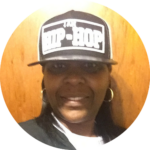
Joquetta Johnson, Library Media Specialist, Baltimore MD
I started using hip-hop in 2004 with Tupac. I saw that students were disconnected with what was happening in the classroom, specifically with Shakespeare. I had just watched a TED talk on hip-hop and Shakespeare, and was reading Tupac’s collection of poetry, “A Rose that Grew from Concrete.”
I started sharing my personal stories about growing up in the golden age of hip-hop, and the students were fascinated. Even though my taste isn’t really what my students are into, I appreciate it for what it is, for the art that it is. That’s how I make those connections. Students really appreciate the authentic conversations that come out of hip-hop.
I think the biases against hip-hop originate from the media. We think it’s about misogyny and heavy violence glorification. Yes, those things exist, but there’s more to it than that. We can use hip-hop to address those issues. And a lot of the biases we have against hip-hop appear in other types of literature, in things we already study.
I have a lot of teachers that come to me and say they can’t use hip-hop because “they don’t know it.” You just need to have an appreciation for it. Don’t feel like you have to know everything about hip-hop at first, just have a willingness to learn for your students!
[Tweet “”Don’t feel like you have to know everything about hip-hop at first””]To be an advocate for hip-hop ed, be prepared with examples of how it can be used. And let your students be advocates as well. Hip-hop grew from marginalized youth who wanted a voice. Use hip-hop to give your students a voice.[/vc_column_text][/vc_column][/vc_row][vc_row][vc_column][vc_separator color=”custom” border_width=”4″ accent_color=”#f65412″][vcex_spacing][vc_single_image image=”14019″ alignment=”center” onclick=”custom_link”][vcex_spacing][vc_separator color=”custom” border_width=”4″ accent_color=”#f65412″][vcex_spacing size=”20px”][vcex_heading text=”#FlocabChat Highlights” font_weight=”semibold” color=”#dd2d18″][vcex_spacing size=”10px”][vc_column_text]Hip-hop is a medium that allows students to express themselves and make real-world connections to what they’re learning in the classroom. As an integral part of today’s youth culture, hip-hop also prompts social discussion and commentary. In order to be a part of that meaningful discussion, students have to recognize that they’re in a safe environment. One way for teachers to build relationships with their students is through their music tastes. Start by asking your students what they’re listening to and who their favorite artists are, then create a class playlist. Music streaming apps like Pandora also have a “clean” filter so that you can make sure the songs in your playlist are school-appropriate. [/vc_column_text][/vc_column][/vc_row][vc_row][vc_column width=”1/2″][vc_column_text]
A1 I usually play a Hip Hop Pandora station when my students are working. You can click a button so no explicit lyrics play. I can always tell the songs they like because they begin to bob their heads as they write. #FlocabChat
— Catrice Spain, M.A.T. (@CSpainTeaches) February 14, 2018
[/vc_column_text][/vc_column][vc_column width=”1/2″][vc_column_text]
A1: I think the biggest tool to use to teach my students has been listening to them. If I notice their singing a song, I’ll add it to our class Spotify playlist… small things like that. A challenge is just sometimes, they don’t want to share. #FlocabChat pic.twitter.com/YCWa5ia5Nj
— Karie Frauenhoffer △⃒⃘ ⚯͛ (@legitkfrauey) February 14, 2018
[/vc_column_text][/vc_column][/vc_row][vc_row][vc_column][vc_single_image image=”13859″][vcex_heading text=”Build a connection with your students” font_weight=”semibold” color=”#dd2d18″][vcex_spacing size=”20px”][vc_column_text]Our #FlocabChat host put it best: “hip-hop education is a great bridge to building meaningful relationships with your students.” As the most popular music genre, you’ll probably find that your class playlist is dominated by hip-hop.
Hip-hop can be used to create a culturally responsive curriculum. It is important to acknowledge that every student comes from a different background and cultural learning style and will interpret content differently. It is also important to note that hip-hop is a powerful tool for in-school learning as it bridges education with out-of-school practices.
Making connections between components of texts, like race, class, gender, oppression, and real-life applications will benefit students. Studies show that, especially within urban environments, a large number of students come to school and find their culture suppressed or rejected altogether within the classroom. As a result, those students become disengaged. Hip-hop is a solution.[/vc_column_text][/vc_column][/vc_row][vc_row][vc_column width=”1/2″][vc_column_text]
#HipHopEd is a great bridge to building meaningful relationships with your students #Flocabchat https://t.co/Ibs4dp5xT3
— Joquetta Johnson (@accordin2jo) February 14, 2018
[/vc_column_text][/vc_column][vc_column width=”1/2″][vc_column_text]
A4. Elements of Hip-Hop and Reality Pedagogies can be used to create safe spaces and students who are vested in the maintenance of their classrooms remaining safe and creative spaces #Flocabchat #HipHopEd
— #HipHopEd (@TheRealHipHopEd) February 14, 2018
[/vc_column_text][/vc_column][/vc_row][vc_row][vc_column][vc_column_text]As part of the global pop-culture discussion, hip-hop can also be accessed in nearly every language. It is not simply a music genre; it is a culture itself that has made a profound impact on youth culture.[/vc_column_text][/vc_column][/vc_row][vc_row][vc_column][vcex_heading text=”How can you implement hip-hop in your classroom? ” font_weight=”semibold” color=”#dd2d18″][vcex_spacing size=”20px”][vc_column_text]Here are a few suggestions that use classroom-approved hip-hop songs from this playlist curated by Timothy Jones, @tdj6899, in tandem with Flocab lesson plans.[/vc_column_text][/vc_column][/vc_row][vc_row][vc_column][vc_text_separator title=”Lesson on Nelson Mandela” title_align=”separator_align_left” color=”custom” accent_color=”#dd2d18″][vcex_spacing size=”40px”][vcex_icon_box heading=”Listen” icon=”fa fa-youtube-play” heading_color=”#55a003″ icon_color=”018ED5″]Listen to “What the Drums Say: a Tribute to Nelson Mandela” by Jasiri X. The lyrics provide a brief history of Mandela’s life, including his 27 years in jail.[/vcex_icon_box][vcex_spacing size=”20px”][vcex_icon_box heading=”Watch” icon=”fa fa-video-camera” heading_color=”#55a003″]Then, watch this Flocabulary Word Up Green video that tells the story of Nelson Mandela fighting for the rights of South Africans through apartheid and this Week in Rap unit that covers Mandela’s death in 2013.[/vcex_icon_box][vcex_spacing size=”20px”][vcex_icon_box heading=”Create” icon=”fa fa-microphone” heading_color=”#55a003″]After that, students can use Lyric Lab to write their own raps about Nelson Mandela’s life and impact, integrating the vocabulary and history they learned. [/vcex_icon_box][/vc_column][/vc_row][vc_row][vc_column width=”1/2″][vc_single_image image=”13949″ onclick=”custom_link” img_link_target=”_blank” img_hover=”grow” link=”https://www.flocabulary.com/unit/3-mandela-is-free/”][/vc_column][vc_column width=”1/2″][vc_single_image image=”13950″ onclick=”custom_link” img_link_target=”_blank” img_hover=”grow” link=”https://www.flocabulary.com/unit/week-in-rap-december-13-2013/”][/vc_column][/vc_row][vc_row][vc_column][vc_text_separator title=”Start a Discussion on Social Justice” title_align=”separator_align_left” color=”custom” accent_color=”DD2D18″][vcex_spacing size=”40px”][vcex_icon_box heading=”Listen” icon=”fa fa-youtube-play” heading_color=”#55a003″ icon_color=”018ED5″]Listen to “‘Till We Get There” by M1 featuring K’naan and Story James.[/vcex_icon_box][vcex_spacing size=”20px”][vcex_icon_box heading=”Watch” icon=”fa fa-video-camera” heading_color=”#55a003″]The first few lines of “‘Till We Get There” mention the danger and poverty of Mogadishu, Somalia. Somalia has been in terrorist conflict for years. Learn about how radical Islamic terrorism affects Somalia in this Week in Rap Unit.[/vcex_icon_box][vcex_spacing size=”20px”][vcex_icon_box heading=”Watch” icon=”fa fa-video-camera” heading_color=”#55a003″]Then, watch our Middle Ages: Africa unit, which starts by questioning why we don’t spend as much time studying Africans as much as we study Europeans. You can also check out our Imperialism unit.[/vcex_icon_box][vcex_spacing size=”20px”][vcex_icon_box heading=”Discuss” icon=”fa fa-bullhorn” heading_color=”#55a003″]Armed with this knowledge, prompt your students to discuss the importance of diverse lessons and topics in the classroom. You could start the discussion by asking students how they think schools should incorporate the history and lessons of historically silenced people. [/vcex_icon_box][/vc_column][/vc_row][vc_row][vc_column width=”1/3″][vc_single_image image=”13943″ onclick=”custom_link” img_link_target=”_blank” img_hover=”grow” link=”https://www.flocabulary.com/unit/middle-ages-africa/”][/vc_column][vc_column width=”1/3″][vc_single_image image=”13945″ onclick=”custom_link” img_link_target=”_blank” img_hover=”grow” link=”https://www.flocabulary.com/unit/week-in-rap-october-20-2017/”][/vc_column][vc_column width=”1/3″][vc_single_image image=”13946″ onclick=”custom_link” img_link_target=”_blank” img_hover=”grow” link=”https://www.flocabulary.com/unit/imperialism/”][/vc_column][/vc_row][vc_row][vc_column][vc_text_separator title=”SEL Lesson on Goals and Managing Frustration” title_align=”separator_align_left” color=”custom” accent_color=”DD2D18″][vcex_spacing size=”40px”][vcex_icon_box heading=”Listen” icon=”fa fa-youtube-play” heading_color=”#55a003″ icon_color=”018ED5″]“Slide Show” by T.I. is about moving toward your goal despite the hardships that may be in your way.[/vcex_icon_box][vcex_spacing size=”20px”][vcex_icon_box heading=”Watch” icon=”fa fa-video-camera” heading_color=”#55a003″]After going over the lyrics of “Slide Show,” watch our Goal Setting and Managing Frustration units.[/vcex_icon_box][vcex_spacing size=”20px”][vcex_icon_box heading=”Write” icon=”fa fa-pencil” heading_color=”#55a003″]Have your students write down what their goals are, any challenges that might be in their way and how they would manage the frustration of those challenges. [/vcex_icon_box][/vc_column][/vc_row][vc_row][vc_column width=”1/2″][vc_single_image image=”13935″ onclick=”custom_link” img_link_target=”_blank” img_hover=”grow” link=”https://www.flocabulary.com/unit/goal-setting/”][/vc_column][vc_column width=”1/2″][vc_single_image image=”13936″ onclick=”custom_link” img_link_target=”_blank” img_hover=”grow” link=”https://www.flocabulary.com/unit/managing-frustration/”][/vc_column][/vc_row][vc_row][vc_column][vcex_heading text=”Additional Resources” font_weight=”semibold” color=”#dd2d18″][vcex_spacing size=”20px”][vc_column_text]
- In a study conducted by The Center for Hip-Hop Advocacy, 28% of U.S. adults — nearly 70 million people — agreed that hip-hop’s musical and cultural history should be taught in schools.
- Kid-friendly Hip-Hop student worksheet
- Research has shown that pedagogical approaches derived from hip-hop culture like call-and-response and co-teaching can have a significant impact on students’ grasp and retention of information.
- Learn by listening! This curated Spotify playlist contains the origins of hip-hop.
- “15 Quick Ideas for Using Hip-Hop in the Classroom” from the ESL Hip-Hop Blog
- @HipHopEd embraces the intersection of Hip-Hop & education. Follow them for tweets, and join their weekly Twitter chat (Tuesdays at 9 PM EST).